




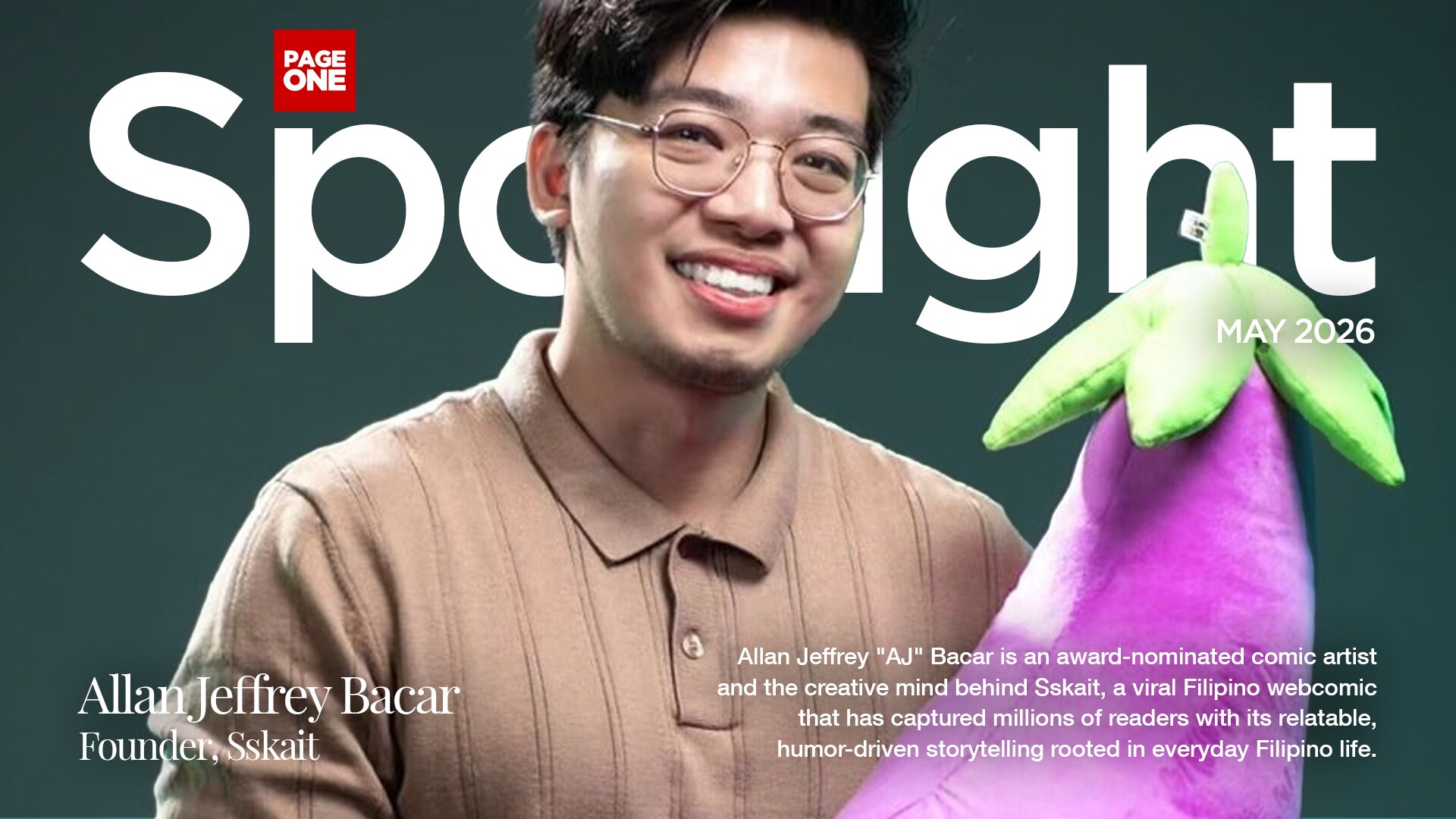






Before the comics reached hundreds of thousands of screens, before the characters became instantly recognizable, there was a version of Allan Jeffrey “AJ” Bacar who followed a path many would consider already set.
An electronics engineer. A graduate with Honorable Mention from De La Salle University. A career in a major telco, working on projects that affected users nationwide. On paper, it was the kind of trajectory that promised stability, growth, and approval.
And for a time, it delivered exactly that.
“I was actually enjoying my job in the telco,” AJ says. “Being given roles to lead and support engineering projects that impact a lot of users nationwide is a privilege.”
The work was demanding. There were sleepless nights, long hours, and the quiet pressure that comes with responsibility. But there was also structure. Guidance. A sense of direction shaped by mentors and expectations.
What it did not fully address was something more internal.
The version of AJ inside that system was not unhappy, but he was not entirely settled either. There was another part of him, one that had existed long before the degree and the job, that continued to look for space.
Drawing had always been there.
As a child, it was how he made sense of things. A way to communicate, to share moments with his brother, his big sister, his friends. Even in college, that instinct stayed, showing up in publication work and small creative outputs that lived alongside academic demands.
He did not begin Sskait as a career move. He began it as something closer to release.
The name itself came quietly. A bus ride. Rain against the window. A passing moment that stayed just long enough to become something else. That pattern would continue in his work. Some of his most recognizable series, from Ulan to Multo Serye to Man vs. Ipis, did not start from elaborate planning. They started small.
“All of it are usually accidental lang talaga,” he says. “I make the comic story as it happens… if a random intrusive thought happen na I think, ‘Parang funny to haha,’ I make it into a comic.”
There is no heavy filtering in that process. No attempt to force ideas into something more polished than they need to be. He creates, posts, and allows the audience to respond in its own way.
That simplicity is part of what kept the work grounded, even as it began to grow.
Because it did grow.
What once existed as something shared among friends slowly reached a wider audience. What used to be a habit became a routine. And with that came a shift, not just in scale, but in responsibility.
Still, some things remained unchanged.
“Whenever I make comics, up until now, I send it to my friends / fam first before I have it finalized and uploaded,” AJ shares.
It is a small ritual, but one that anchors him. The feedback, the laughter, the reactions from people who knew him before any audience did. It keeps the process personal, even when the output is public.
“It has the same feeling of happiness,” he says.
But scale introduces its own realities. What used to be purely creative now includes administrative work, growth strategies, and the unseen labor of maintaining a platform. These are the parts he admits feel more like work.
“It’s a bit challenging, yeah, but it is necessary.”
And yet, the act of drawing itself has not lost its place.
“When I go back sa part of making comics, parang… there are comics that makes me feel at peace pa rin,” he says, especially those rooted in real and heartwarming stories.
The decision to leave corporate was not immediate, nor was it easy.
Security is difficult to walk away from, especially when it aligns with what is expected. His parents, at first, were hesitant about the idea of pursuing art full-time. The risks were clear. The path was uncertain.
“It was really hard for me to move full time to do comics and content creation,” AJ admits.
What changed was not a single moment, but a series of experiences that began to carry more weight.
One of them was simple. Bringing his parents along to meet-and-greet events across the country. Letting them see, firsthand, the places his work had taken him.
“Parang, I felt happy na nalilibot ko sila with me,” he says.
There was also something less visible but more lasting. Messages from people who found comfort in his work. Readers going through difficult moments who saw something of themselves in his stories.
“Marami kang nai-impact na tao positively,” he reflects. “It adds a lot of meaning and purpose to the work I do.”
Still, even with growing validation, there was a point where staying in between two worlds was no longer sustainable.
“The turning point siguro is, when the demand came,” he says.
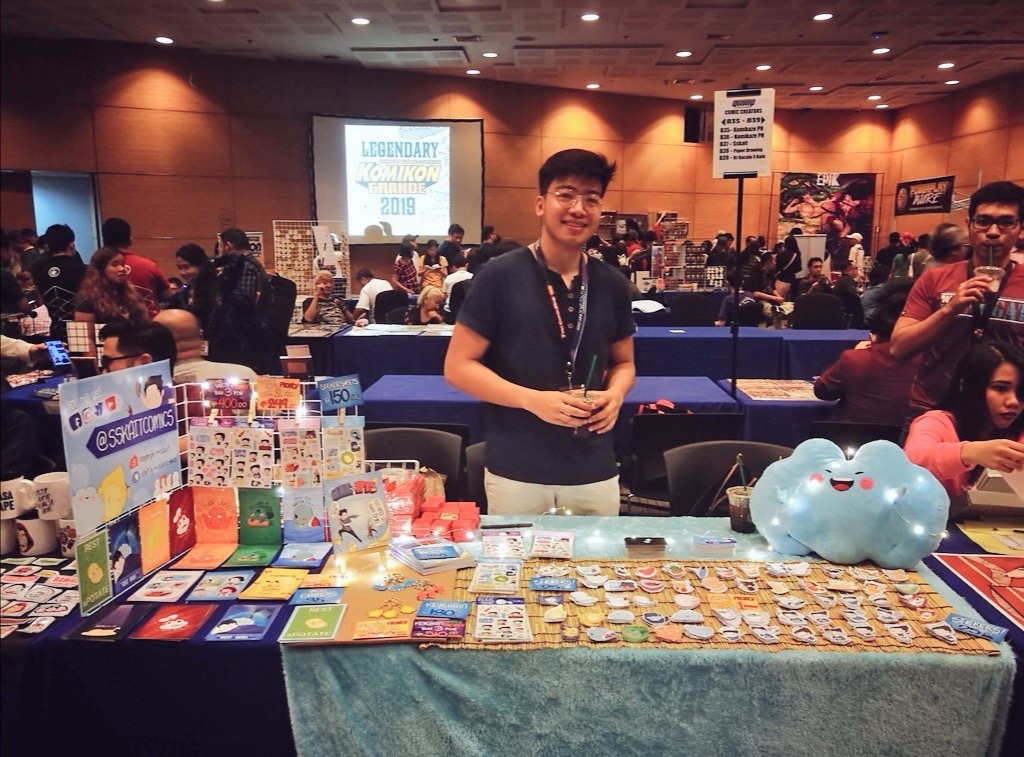
People began looking for him at conventions. Brands started reaching out. The audience was no longer passive. It was active, expectant, growing. At the same time, his corporate role continued to demand time and energy, often beyond regular hours.
“It was challenging na ipag-sabay yung corporate work… sa demand din ng Sskait,” he explains.
There comes a point when something that begins as a side project asks to be taken seriously. Not just in output, but in commitment.
For AJ, that point meant choosing.
Not because he had planned to leave engineering behind, but because what he had built alongside it no longer fit within the margins of his day.
Sskait was never meant to replace anything.
It simply grew until it could no longer remain secondary.
And in that growth, it revealed something many people spend years trying to identify.
Not just what you are good at.
But what you are willing to risk stability for, even when the outcome is not guaranteed.