



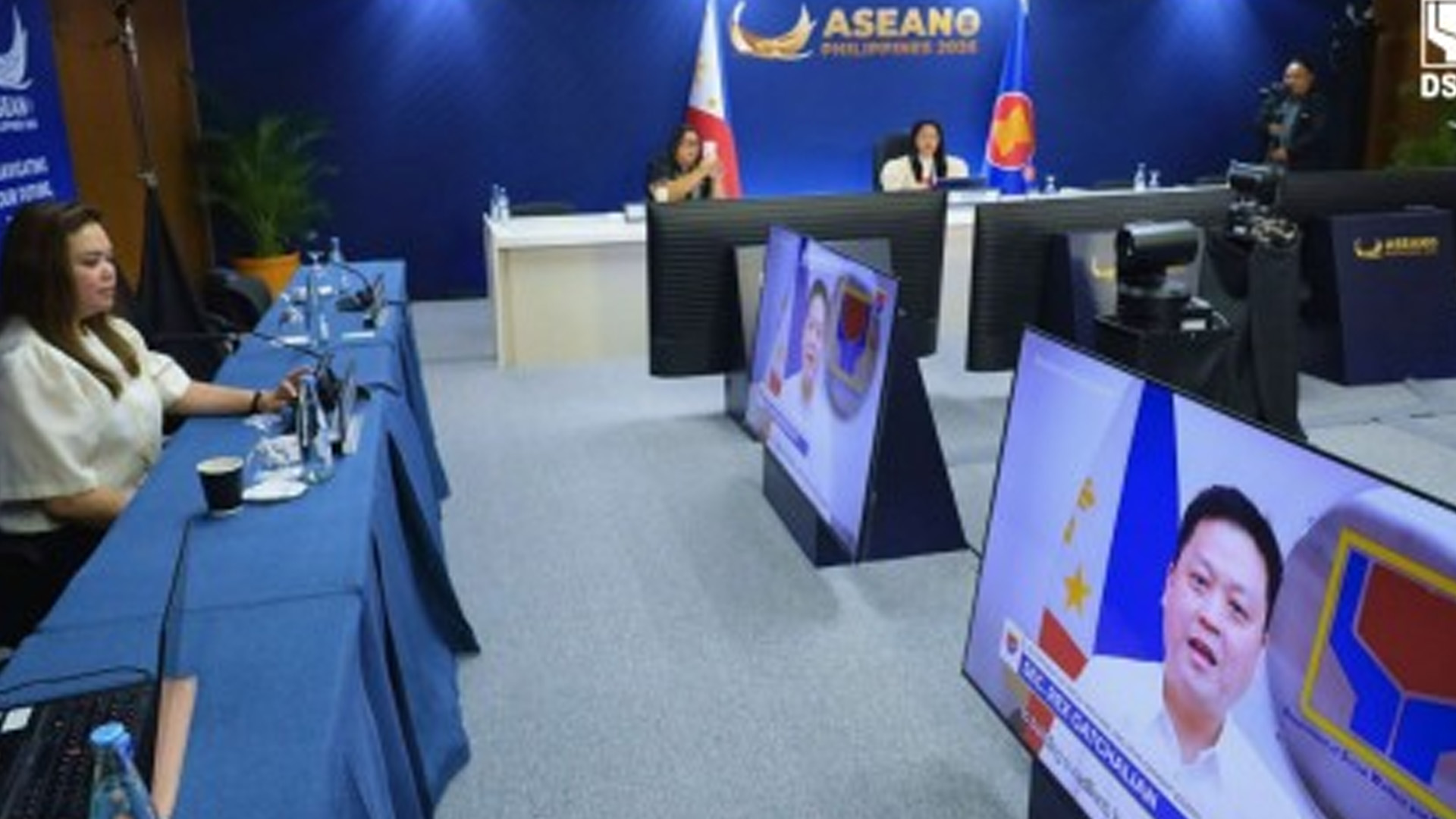







The Department of Social Welfare and Development (DSWD), as the current chair of the Association of Southeast Asian Nations (ASEAN) Socio-Cultural Community (ASCC), has presented a new framework to prioritize the rights and welfare of families in the ASEAN region.
During the second day of the virtual ASEAN Conference and Workshop on Family Development Network on Wednesday, DSWD Assistant Secretary Janet Armas, who is also the Philippine Senior Officials Meeting on Social Welfare and Development (SOMSWD) alternate focal, discussed the ASEAN Family Development Network (ASEAN FamNet).
“The ASEAN Family Development Network aims to strengthen and empower families across ASEAN and enhance their quality of life through inclusive, resilient, and family-centered approaches. It shall serve as the region’s leading platform in advancing family development, fostering stronger collaboration and shared commitment among Member States,” Armas said in her presentation.
The ASEAN FamNet has four goals: promote regional cooperation among ASEAN Member States; develop family-sensitive policies and welfare programs; exchange knowledge, research, and best practices on family development and support systems; and strengthen evidence-based policymaking through research and studies on emerging family issues and trends.
Armas said the DSWD has identified five strategic priorities to achieve these goals.
The strategic priorities focus on enhancing cohesiveness and quality family life; strengthening parent support in the digital age; promoting youth development and social participation; addressing emerging trends and challenges; and building evidence-based policy making on ASEAN Families through research, monitoring, and evaluation.
In terms of enhancing cohesiveness and quality of family life, Armas underscored the necessity to address rapid urbanization and economic inequality.
“This priority emphasizes the need for highly accessible social protection and healthcare services. We must build inclusive systems that adapt to the realities of modern family structures, ensuring that non-traditional and single-parent households receive equitable support,” she said.
Equipping parents with knowledge on digitalization and technology will also be prioritized in the framework to help promote online child protection and healthy management of screen time among children.
For the third priority, Armas cited the significance of youth participation in nation-building.
“We must support our youth as they make the critical transition into adulthood and active social participation. This involves building leadership capabilities, practical life skills, and deep-seated resilience within our communities,” she said.
The DSWD considers addressing emerging trends and challenges a strategic priority because of issues such as labor migration, demographic shifts, and the escalating impacts of climate change.
“Disasters do not just destroy infrastructure; they fracture families. It is imperative that we integrate family perspectives directly into our disaster risk reduction (DRR) frameworks. We need policies that build family resilience before a climate-related disaster strikes, utilizing anticipatory social protection mechanisms,” Armas said.
“Simultaneously, we must adapt our national policies to support aging populations and the economic realities of declining fertility rates. We also must provide robust institutional support for transnational families who are separated by migration, ensuring their social and legal protection across borders.”
Under the fifth priority, Armas underscored the necessity to establish standardized regional indicators for family well-being and to consolidate research through the ASEAN Family Knowledge Hub.
“Embedding family-centered strategies in development frameworks calls for reinforced governance structures, established coordinating bodies, and evidence-based research to assess and expand successful practices,” she said.
Once approved, the ASEAN FamNet will be operationalized from 2026 to 2030 to guide ASEAN Member States in crafting policies and social welfare programs designed to address the present complex and evolving realities of ASEAN families. (PNA)