



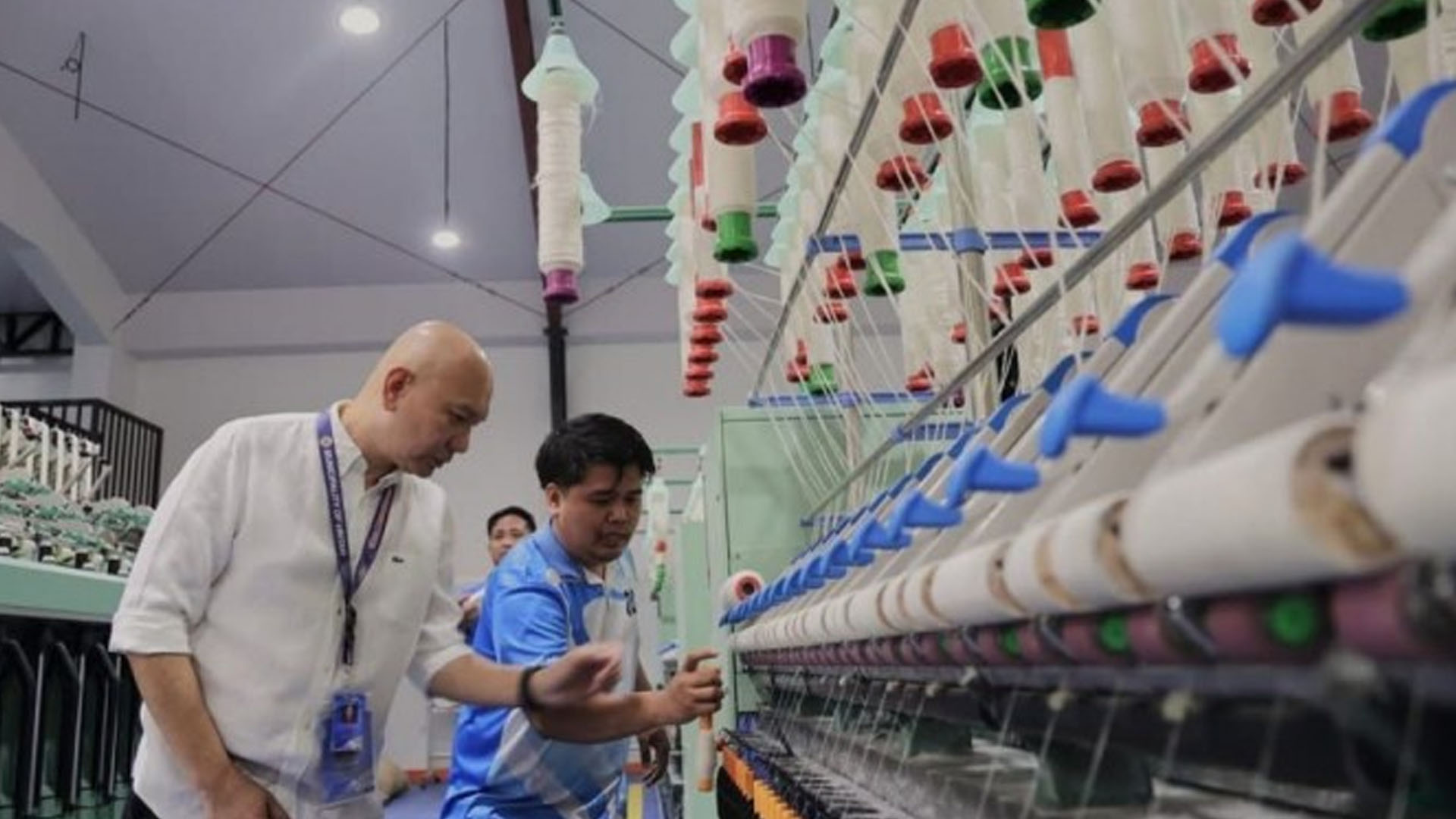







A micro-scale spinning facility located in this municipality has begun transforming locally sourced fibers – such as cotton, bamboo, abaca, banana, pineapple, and jute (saluyot) – into high-quality yarn for weaving and knitting.
Kent Ramil, senior science specialist with the Department of Science and Technology (DOST) 1 (Ilocos Norte), confirmed this on Wednesday after an on-site visit to the ongoing operation of the Regional Yarn Production and Innovation Center (RYPIC) in Barangay Parut.
Currently operated and managed by the DOST – Philippine Textile Research Institute (DOST-PTRI) and staffed by a team of textile engineers, technicians and scientists, the facility is expected to produce up to 150 kg of cotton yarn daily, a first for the province.
“We are so happy about the center’s operation. We now have access to soft, natural threads that are easier to work with than synthetic ones,” Caroline Sabado, a handloom weaver from Lower Surong Valley, said in an interview.
Backed by the Vintar town government and DOST, local weavers like Sabado are being trained to enhance their weaving skills and workflow.
In another interview, Dr. Julius L. Leaño Jr., director of the PTRI, said the new facility aims to empower weaving communities across Ilocos Norte and its neighboring provinces.
“By providing locally sourced threads, we aim to strengthen the handloom industry and promote homegrown textile production,” he said.
The project supports national initiatives, including the Philippine Tropical Fabrics Law, which encourages the use of local fibers in government textiles and uniforms.
He expressed confidence that the Philippine textile industry is on the path to revitalization.
According to Leaño, with government support, private investment and rising demand, Philippine textiles are poised to thrive in the global sustainable fashion market.
He reaffirmed that sustainability, circularity, and cultural appreciation will fuel industry growth, making it a flourishing sunrise industry.
A recent study shows that the global yarn market is being reshaped by sustainability requirements. Cotton yarn remains dominant, but recycled fibers, blended yarns, and specialty functional yarns are among the most in-demand.
With this, the DOST-PTRI is promoting local textile production to increase supply for handloom weavers, designers, social enterprises, apparel manufacturers, and textile-based MSMEs in the region.
Beyond increasing yarn production, the center also strengthens local livelihoods, promotes the sustainable use of indigenous fibers and enhances the competitiveness of Philippine handwoven products. (PNA)