



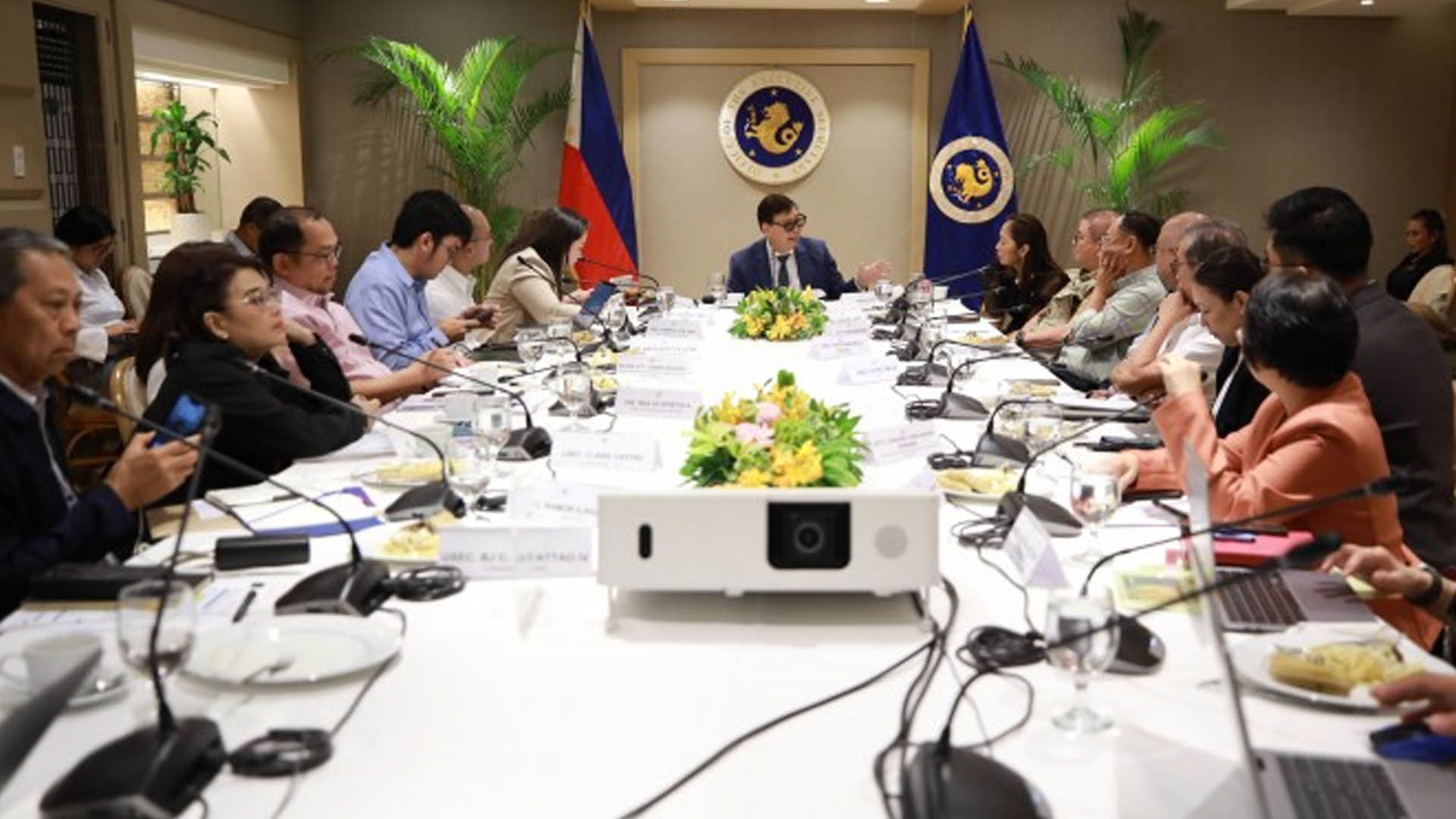







Malacañang has ordered a whole-of-government effort to hasten the rollout of fuel subsidies for public utility vehicle (PUV) operators and drivers, as well as fare discounts for commuters.
The directive was issued following a meeting convened by Executive Secretary Ralph Recto at Malacañan Palace on Wednesday with concerned agencies to firm up the implementation of the program aimed at cushioning the impact of rising fuel prices brought about by the Middle East conflict.
During the meeting, Marcos ordered key transport and energy agencies to ensure the smooth and coordinated rollout of the transport assistance package, according to a statement from the Office of the Executive Secretary (OES).
“It behooves LGUs (local government units) along with the DILG to team up with agencies like the Department of Energy (DOE), Department of Transportation (DOTr) and the Land Transportation Franchising and Regulatory Board (LTFRB) on ensuring the seamless implementation of the twin directives of [President Ferdinand R. Marcos Jr.],” Recto said.
The assistance package includes fuel subsidies for jeepneys and UV Express operators and drivers under the Pantawid Pasada Fuel Subsidy Program, as well as the Service Contracting Program (SCP) for buses and jeepneys on select routes, which will provide 20-percent fare discount to passengers.
Recto emphasized the need for close coordination among agencies to ensure that eligible beneficiaries are able to access the financial support and comply with the mandated fare discounts.
Under the SCP, PUV operators and drivers will receive subsidies ranging from PHP40 to PHP100 per kilometer to offset the operating losses from surging fuel costs.
In return, participating operators are required to grant a 20-percent fare discount to commuters on covered routes.
The program rollout began this week in Metro Manila, with initial implementation along Commonwealth Avenue in Quezon City, and then expanded to Quezon Avenue, España, Zapote, A. Bonifacio, Rizal Avenue and Marcos Highway before the nationwide implementation.
Fuel subsidies will be provided through accredited gas stations to be monitored by the DOE.
The LTFRB, for its part, has been directed to ensure compliance with the fare discount scheme and is set to release a fare matrix to guide commuters on the adjusted rates.
The fare reduction is on top of the 20-percent discount granted to senior citizens and persons with disabilities (PWDs) under existing laws.
Once implemented nationwide, the transport assistance program is expected to benefit 50,000 PUV drivers and 1,000 operators, as well as an estimated 15 million commuters.
The initiative is part of the government’s broader response to rising global oil prices triggered by tensions in the Middle East.
Marcos earlier declared a national energy emergency to secure and augment the country’s fuel supply amid the Middle East crisis.
Authorities have intensified monitoring of fuel retailers to prevent hoarding and profiteering, with over 1,000 complaints already lodged through the government’s eGov platform. (PNA)