



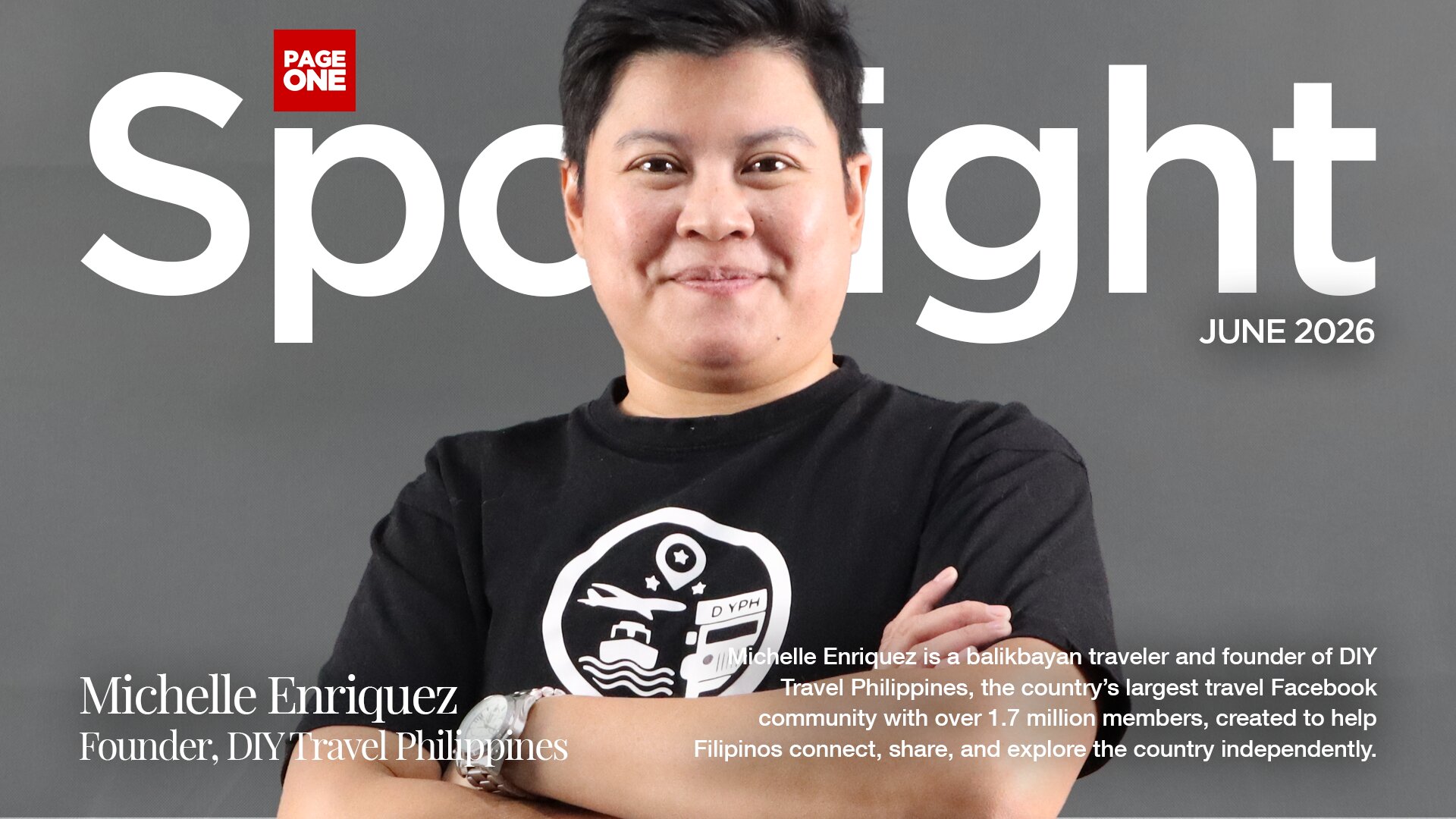





For more than a decade, Michelle Enriquez built something rare on the internet: a community people trusted.
As founder of DIY Travel Philippines, she helped create a space where travelers could exchange real information, ask honest questions, and find support from fellow Filipinos planning journeys both near and far. What began as a practical solution to a personal frustration eventually grew into one of the country’s largest travel communities, with 1.7 million members.
Then, in early 2026, that entire ecosystem nearly disappeared in less than an hour.
What followed was not just a story about hacking or account recovery. It became a painful lesson in platform dependence, digital vulnerability, and the limits of support available to the very people who help make social platforms valuable.
The Hour Everything Changed
At first, Michelle thought it might be a routine login issue. That assumption did not last long.
“The moment I realized it wasn’t just a login issue and that my account was actually being taken over, I immediately tried to change my passwords,” she recalled. “Unfortunately, by then it was already too late.”
Within minutes, malicious content began appearing on her account, seemingly posted through automated scripts. The attack escalated rapidly.
“In the span of about an hour, I lost access to my Facebook account, the pages and groups I managed, and even the Instagram accounts connected to it.”
Then came another blow. Meta suspended her personal account.
The only option available was an appeal form. No direct contact. No human support. No immediate path to explain that the violations were committed by attackers using her compromised credentials. The scale of the crisis became clear when she realized she had lost access to everything at once.
“I think the full scale of what was happening hit me when I realized I was locked out of everything and had no way of contacting anyone directly at Meta.”
When her appeal was eventually rejected, the possibility became real: DIY Travel Philippines, a community built over more than ten years, could be gone. Thankfully, co-admin Ryan Molina helped secure and regain access to the DIY Travel Philippines page. But the experience left a permanent mark.
“That’s when I understood just how vulnerable even large online communities can be.”
When Hackers Put A Price On Community
The attack did not end with the takeover.
Soon after, the hackers contacted Michelle directly through both the page and her personal phone number. They demanded payment. In exchange, they promised access to the groups. With 1.7 million members and years of work at stake, the pressure was immense. Michelle admitted that in that moment, every option felt worth considering.
“At that point, it was tempting to consider every possible option because 1.7 million members and more than a decade of work were on the line.”
But one discovery stopped her.
She found evidence that the group was already being offered for sale.
That changed everything.
“That made me realize I could be dealing with another scam on top of the original attack,” she said. “They had already taken my group—I didn’t want them taking my money as well.”
The decision was brutal but clear: do not negotiate.
There was no reason to believe the attackers would honor any agreement.
Instead, she chose the only path left—continue pursuing recovery through legitimate channels and hope the community could still be saved.
Punished For Being Hacked
For Michelle, one of the most painful parts of the ordeal was not merely losing access. It was being treated as the offender. Her personal account remained disabled because of content posted by the attackers after they had already taken control. That distinction between action and victimhood appeared invisible to the platform’s automated systems.
“I wasn’t being punished for something I did,” she said. “I was being punished for being hacked.”
The emotional toll was immense.
“I felt completely helpless. Losing access to the group honestly felt worse than a breakup.”
That statement may sound dramatic to outsiders. But to someone who spent over a decade building and moderating a community, the loss was deeply personal. DIY Travel Philippines was not just a page or a group. It represented years of relationships, trust, shared memories, and daily labor.
“It was heartbreaking to suddenly see strangers listed as the admins and moderators of a community that I had spent years building.”
What made the situation even harder was the absence of human support. Every appeal led to another automated response, another form, another dead end.
“The hardest part was not being able to speak to an actual person.”
For Michelle, the experience exposed a harsh truth about digital platforms: scale often comes at the cost of human accountability.
“It made me realize how vulnerable community builders can be when support systems are designed to prioritize scale and automation over individual cases.”
Building On Land You Don’t Own
Michelle pursued every available avenue for help. She escalated through multiple channels, including reaching out known personalities in hopes of contacting Meta Philippines directly.
Even that produced no meaningful resolution for the group. The experience forced a difficult realization.
“What it showed me is that no matter how large a community becomes, you are still building on land that you don’t own.”
That may be the clearest summary of the modern creator economy.
Community leaders invest years building engagement, trust, and value. But the infrastructure remains controlled by platforms whose systems are often opaque and largely automated.
“As community builders, we often think of these groups as ours because we invest so much time and effort into them,” Michelle said. “The reality is that a single platform decision… can have a bigger impact than years of community-building.”
It was a painful but clarifying lesson.
The communities people build online may be real.
Their ownership is not.
A Message To Meta
Despite everything, Michelle’s message to Meta is not framed as anger.
It is a call for responsibility.
“I wish Meta would bring back stronger direct support for Facebook community leaders, similar to what we had access to back in 2019.”
For her, the issue is not merely technical.
It is human.
Behind every thriving online community is someone doing invisible work—moderating conflicts, building trust, shaping culture, and showing up consistently over years.
“My hope is that Meta recognizes that behind every successful community are real people who have invested years building trust, content, and engagement on the platform.”
When those people become victims of hacking, she believes there should be a real path to human review and fair resolution.
Not just forms.
Not just automated responses.
Not silence.
“Communities don’t build themselves,” Michelle said. “They are built by people.”
That may be the most important point in Michelle Michelle’s story.
The hacking crisis was not simply about losing an account.
It revealed a larger truth about the internet itself: platforms may host communities, but they do not create them.
People do.
And when those people are left without support in moments of crisis, what gets lost is not just access. It is trust, labor, and years of human connection, things no algorithm can build, and no automated system can fully understand.
Despite the ordeal, Michelle Enriquez chose not to step away. After a grueling recovery process, she and her team successfully regained access to the original DIY Travel Philippines Facebook group reclaiming what was nearly lost for good. But rather than simply picking up where things left off, Michelle also established DIY Travel Philippines 2.0, a new Facebook group that now runs alongside the original.
Together, both communities continue to serve as spaces where Filipino travelers can find honest information, ask real questions, and lean on one another for support. The parallel operation of both groups is perhaps the clearest signal of Michelle’s resolve: that no hack, no automated rejection, and no period of helplessness could undo more than a decade of trust she had built — one traveler at a time.