



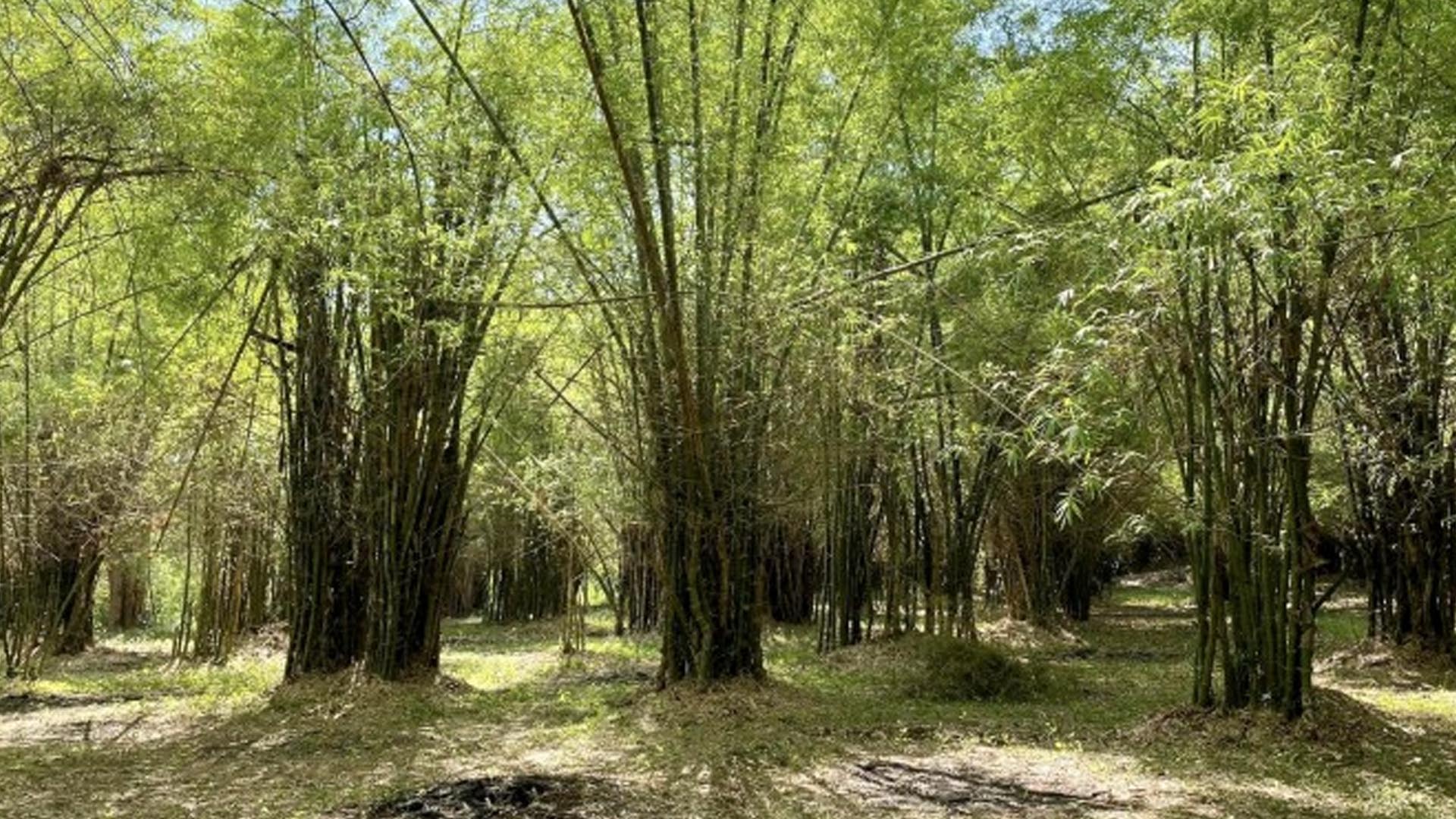







Leyte 3rd District Rep. Anna Victoria Veloso-Tuazon is pushing for wider use of bamboo as a sustainable material, citing its environmental, economic, and climate resilience benefits.
Veloso-Tuazon said two bamboo-related measures have already been approved by the House of Representatives on third reading, including House Bill (HB) 10312, which seeks to mainstream the use of bamboo as a sustainable material for the built environment.
The measure she principally authored was approved on third reading on Aug. 12, 2026, she said.
Another measure, HB 8360, was approved on third reading on March 16, 2026. It seeks to require government agencies to allocate at least 25 percent of their budget for furniture and fixtures made from engineered bamboo and other bamboo-based commodities, in line with the country’s commitment to promote the use and production of sustainable materials.
“Bamboo, as a rapidly renewable grass, could help shift attention toward regenerative and renewable products and materials while promoting environmental governance, social inclusion and livelihood opportunities,” she said in a statement on Thursday.
She also cited bamboo’s potential to reduce carbon emissions because it is bio-based and can still be used as residual material for products such as bamboo charcoal and pellets.
“Bamboo is such an integral part of our story,” Veloso-Tuazon said, noting that the plant symbolizes resilience among Filipinos because of its ability to withstand typhoons and earthquakes.
Bamboo, according to the official, has long been used in the Philippines for shelters, baskets, crab and fish traps and other everyday objects, adding that its abundance also presents significant economic opportunities.
Citing information presented by the Climate Change Commission during the COP29 Forest Pavilion, Veloso-Tuazon said the Philippines ranks sixth among the world’s largest bamboo exporters, with potential production estimated at an average of 36 million culms annually.
She described bamboo as a “quintessential circular economy raw material” because it is compostable and regenerative and can be used in various applications, including construction.
“Bamboo’s environmental benefits include its capacity to sequester carbon, help prevent soil erosion, serve as a windbreak, provide an alternative source of biomass energy and support livelihoods through industries such as furniture, paper, fabric and climate-smart housing,” she added.
The lawmaker said promoting bamboo-based industries could therefore contribute not only to environmental protection but also to rural economic development and the country’s efforts to adapt to the impacts of climate change. (PNA)