



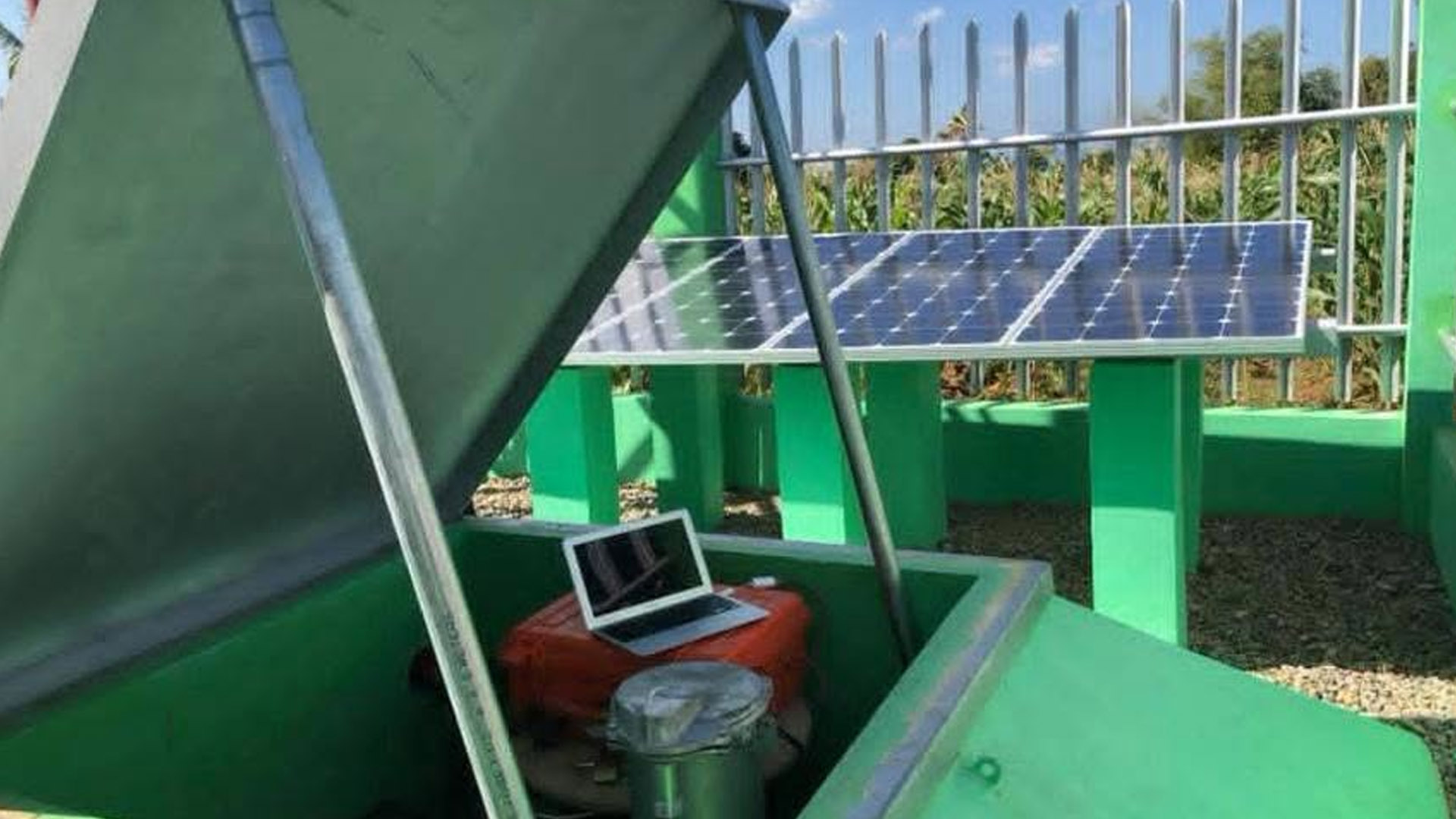







The Philippine Institute of Volcanology and Seismology (Phivolcs) will inaugurate the first borehole seismic station in Mindanao next week, strengthening earthquake and volcano monitoring in the island.
A borehole seismic station is a ground motion monitoring facility where seismic sensors are installed below ground in a drilled hole rather than on the surface.
Mindanao’s borehole seismic station is located at the Barangay Hall grounds of Crossing Rubber, Tupi, South Cotabato. This will monitor Parker and Matutum volcanoes, as well as earthquakes in Soccsksargen and nearby areas.
“Both are active volcanoes and currently at Alert Level 0. Our objective is to have monitoring instruments for all 24 active volcanoes,” Phivolcs Director Teresito Bacolcol told the Philippine News Agency in an interview on Friday.
He said the station would provide Phivolcs with additional data on seismic waves during earthquakes.
“The additional reading can help us detect smaller earthquakes and improve our estimates of where they occurred and how deep they were,” Bacolcol said.
For volcanic earthquake monitoring, the Phivolcs normally use seismometers installed at or near the ground surface.
A borehole station also uses a seismometer, but the sensor is installed underground.
“Because it is underground, it can pick up weaker earthquakes more clearly since there’s not much noise from surface activity, like passing vehicles,” Bacolcol said.
Meanwhile, Bacolcol clarified that although Phivolcs prioritizes active volcanoes in its routine monitoring, the agency also studies potentially active volcanoes.
“We study and assess potentially active volcanoes and can conduct field investigations if necessary,” he said. (PNA)