



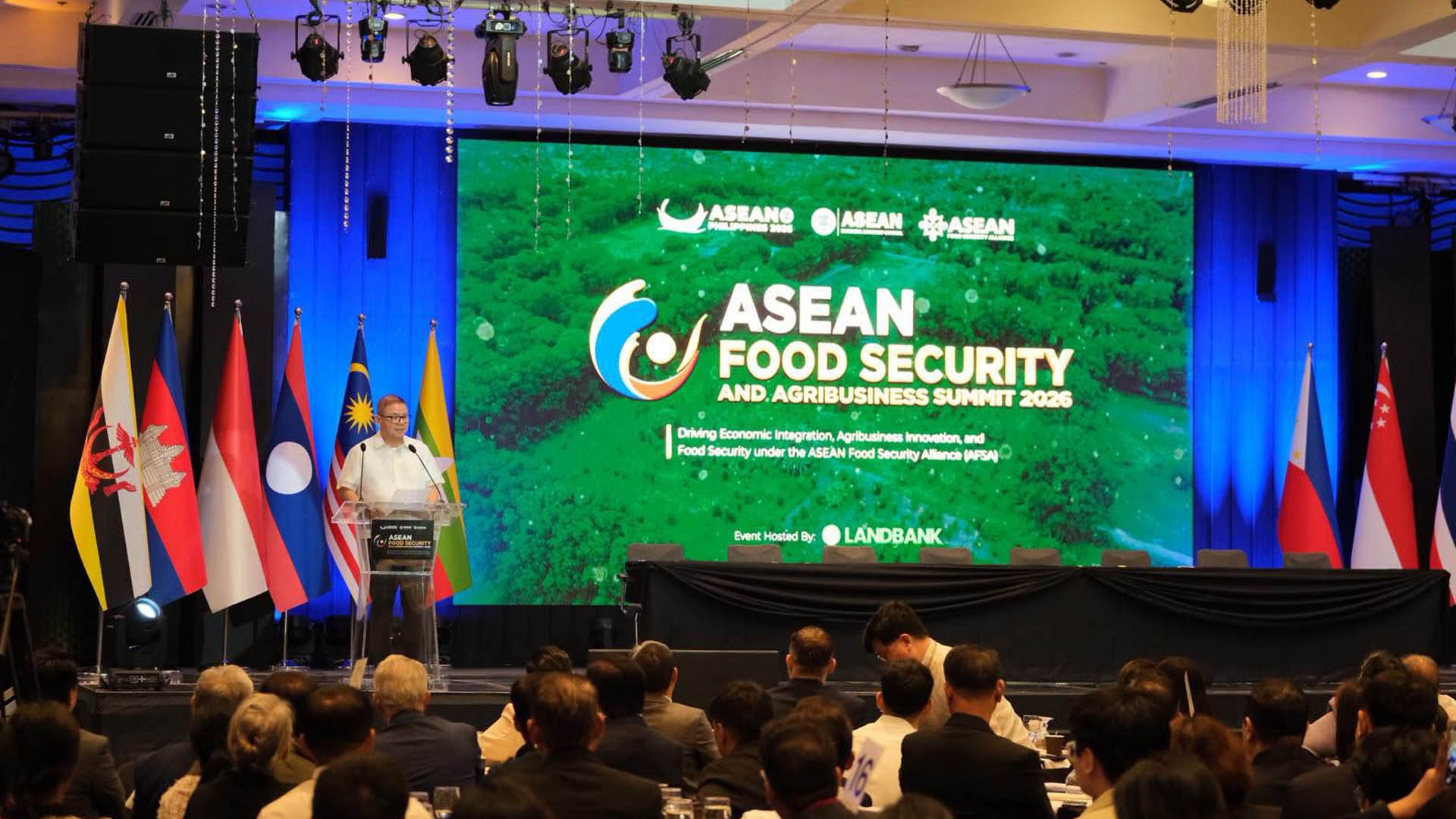







The Department of Agriculture (DA) on Monday underscored the significance of regional cooperation in Southeast Asia to ensure a stable food supply despite emerging climate and geopolitical risks.
In a statement, DA Secretary Francisco Tiu Laurel Jr. said this is now more important as these challenges pose adverse effects to agriculture and food security.
Mutual economic investments and trade ties among Association of Southeast Asian Nations (ASEAN) member states are seen to support supply chains amid domestic production gaps, he said.
Tiu Laurel cited the need to expand the “Big Brother, Small Brother” concept across the regional system.
In the Philippine setting, this is realized by pairing up small-scale agripreneurs with established corporations and larger enterprises, like the Adapt-A-Coop program.
The Adapt-A-Coop links local cooperatives with the private sector for hands-on mentorship.
Crucial in this approach is the financial and operational literacy among smallholders.
“They have to know the costs of what they’re producing and marketing, and how to market it properly and bring it to the right markets,” he said.
These cover critical disciplines, including production cost accounting, modern packaging and targeted marketing — mostly capacitating rice and agricultural cooperatives in Luzon and Mindanao.
This initiative seeks to shorten traditional supply chains, eliminate redundancy among middlemen and secure fairer pricing for Filipino producers.
Tiu Laurel said a private-sector-led mentoring supported by government infrastructure will advance a more “competitive, resilient, and integrated agriculture sector” across Southeast Asia. (PNA)