



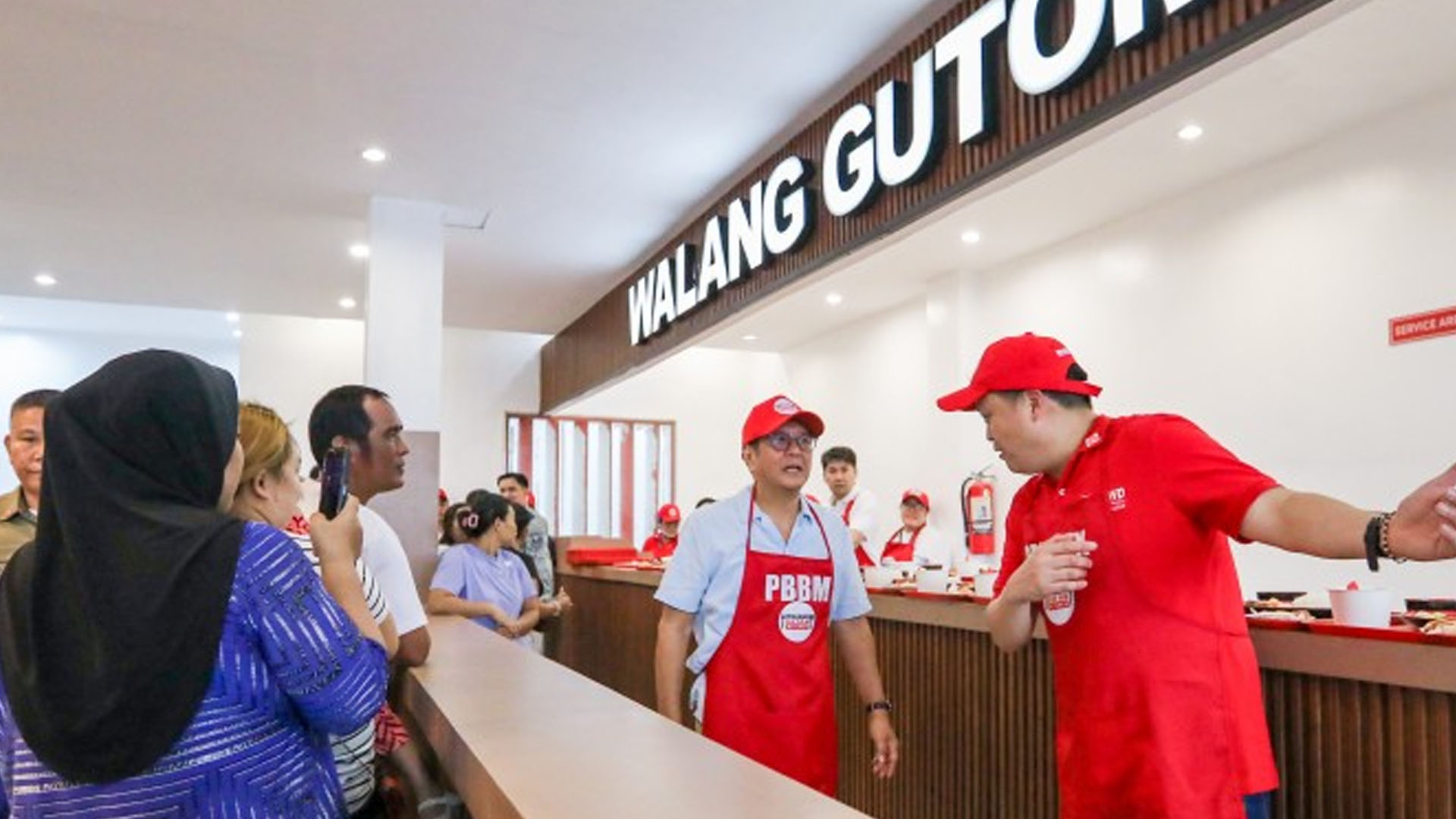







President Ferdinand R. Marcos Jr. on Monday led the opening of the country’s third Walang Gutom Kitchen and the first in Mindanao, expanding the government’s flagship anti-hunger program as part of efforts to ensure that no Filipino goes hungry.
The new Department of Social Welfare and Development (DSWD)-run facility in Zamboanga City is expected to provide nutritious meals daily to around 150 to 200 beneficiaries while serving as a hub for complementary social protection services.
The opening marks the latest expansion of the government’s Walang Gutom Program (WGP), the national administration’s flagship anti-hunger initiative launched in 2023 and institutionalized through Executive Order 44 signed by Marcos in 2024.
The program was established following the President’s directive to address food insecurity and reduce involuntary hunger among Filipino families.
According to the Presidential Communications, the Zamboanga facility will operate alongside other government social intervention programs, including the DSWD’s Pag-abot Program, which assists individuals and families in street situations, and the Tara, Basa! Tutoring Program.
The Zamboanga kitchen becomes the third such facility in the country, following the establishment of the first Walang Gutom Kitchen in Pasay City in December 2024 and the second facility in Cebu City, which Marcos inaugurated last week together with DSWD Secretary Rex Gatchalian.
Unlike traditional feeding programs, Walang Gutom Kitchens operate as community-based food banks that provide free, nutritious breakfast and lunch daily to both identified beneficiaries and walk-in clients experiencing involuntary hunger.
The latest expansion comes as the government reports that more than 501,000 Filipino families have already benefited from the broader Walang Gutom Program nationwide.
The administration is also pushing to institutionalize the program permanently through legislation currently pending in the House of Representatives, which seeks to make anti-hunger interventions a long-term government commitment while strengthening support for poor households and local agriculture. (PNA)